
What Bike Is Right for Me?
- Nov 8, 2025
- 4 min read
Finding the right off-road wheels

Choosing the best bike for your riding needs
It’s exciting to imagine the adventures you’re going to have on your motorcycle exploring off the tarmac. Whether you’re planning to investigate the local countryside, commute with some off-road fun on weekends, head out for multi-day explorations or challenge yourself on technical terrain, picking the right bike makes all the difference. Below, we break down three popular types - trail and dual sport bikes, adventure bikes, and enduro bikes - so you can match your riding style and goals to the right machine for you.
Trail and Dual Sport Bikes: Lightweight Versatility for Easy-going Exploration

Trail and dual sport bikes combine the best of easy handling, versatility and accessibility, making them ideal for riders at the beginning of their off-road journey, those on a restricted licence or those seeking a practical motorcycle for both everyday use and weekend adventures. These bikes are relatively lightweight and manageable, with user-friendly power delivery and suspension that is forgiving on rough terrain such as stony tracks and forest lanes. They’re also capable and comfortable for everyday road riding, with space to carry some gear and enough oomph to keep up with the traffic flow.
Popular models include Yamaha’s XT125R, the Honda CRF250L and CRF300L, Voge 300 Rally, Suzuki DRZ400 or DRZ-4S, KTM 390 Adventure R and the Royal Enfield Himalayan 450, all of which inspire confidence for relaxed rides or spontaneous green road escapes. For something more off-road focused, there’s the KTM 690 Enduro R, which has more power and premium suspension capable of handling tougher terrain.
The compromise lies in the detail though – this class of bike varies considerably in factors like weight, horsepower, suspension spec and seat height, with some more road focused and some better suited to rough terrain. When choosing, consider what type of trails you’ll be riding and how technical you’ll want to get. They’ll all cope happily with easier trails, but if you’ll be riding in steep and rocky areas or tackling deep mud and ruts, you’ll want to consider whether you’ll manage the weight and that the suspension and tyres will be up to the challenge.
Adventure Bikes: Covering Distance and Carrying Gear

If your passion is exploring for days on end, tackling a mix of motorways, country roads, and gravel or dirt tracks, adventure bikes are built to go the distance. With larger engines, advanced electronics, and integrated luggage options, adventure bikes are suited for riders who need comfort, reliability and the ability to haul equipment for longer journeys.
Many of us have been inspired by Ewan McGregor and Charley Boorman’s Long Way Round, and the BMW GS Adventure series are the classic adventure bikes for long distance exploring. But there are many other superb bikes in this class, including the KTM Super Adventure R and Adventure R range, Honda’s Africa Twin, Voge DS800X Rally and Yamaha’s Tenere 700, which are well-specced for both on and off-road riding.
The downside is the weight – these bikes typically weigh in at over 200kg, meaning you’ll compromise on manoeuvrability and may find them challenging to handle on tight trails, steep inclines or when you inevitably need to pick the bike up after a fall. For newer riders, or those who plan to spend more time off-road than on, this can quickly sap confidence and energy. That said, for riders who value long-distance comfort, stability at motorway speeds and the reassurance of a capable, go-anywhere machine, the trade-off is often well worth it.
Enduro Bikes: Performance for Technical Terrain
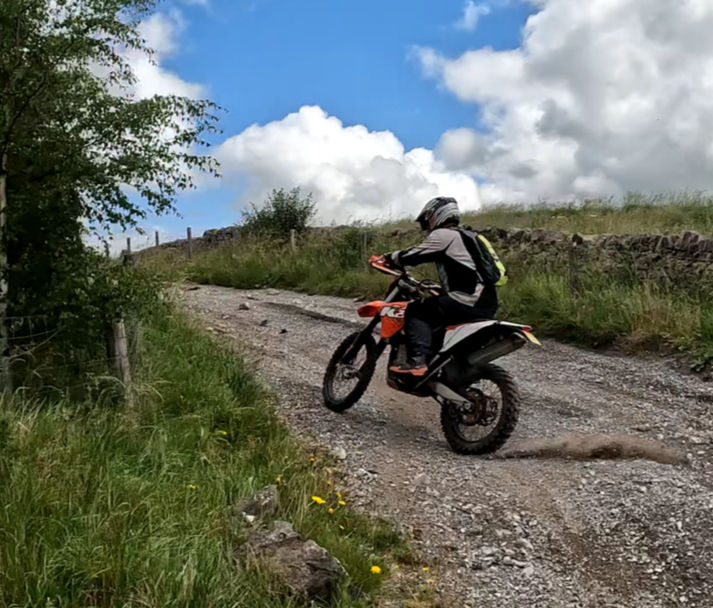
Enduro bikes excel when the going gets tough.
Lightweight but powerful, with high-end suspension and rugged frames, these bikes are intended for challenging trails, steep climbs and muddy, rutted ground. They’re popular among experienced riders who seek adrenaline and want to push their limits on demanding off-road trails, but arguably, they can be the easiest bikes to ride off-road because of their light weight and capable suspension.
KTM’s EXC range and Husqvarna’s FE range are extremely popular. Others to consider are the Beta RR, GasGas EC, Yamaha WR and Sherco SEF and SE ranges. Typical choices are 250cc to 450cc engines and there’s the choice of four-strokes - or two-stroke models for those who like their buzz with a whiff of blue smoke.
Although they’re road legal, they’re not designed for road miles and may need transportation to the trails. Fuel tanks can be small, meaning planning in frequent petrol stops, they’re not designed for carrying luggage and the highly tuned engines require servicing counted in hours, not thousands of miles.
How to Choose?
Skill Level: a general rule of thumb is that heavier bikes need more skill to ride off-road. Trail and dual sports bikes suit those starting out, with more friendly power delivery. Adventure bikes offer a more challenging off-road experience but are best for distance and comfort; enduro bikes reward technical skill but are easiest for tackling truly tricky terrain.
Terrain: Trail bikes and dual sports for mixed surfaces and easy off-road terrain; adventure bikes for long journeys and gravel roads; enduro bikes for the toughest sections.
Riding Purpose: Consider whether you’ll be commuting, touring, exploring easy-going trails or tackling the tough stuff.
Comfort and Fit: Make sure your bike feels right for your height, weight, general fitness and riding style. Those who are smaller of stature may be more comfortable with a lighter bike, but many big adventure bikes have options for lowering the seat height.
Ready to Ride?
No matter what your ambition - gentle exploration, practical commuting, long-distance expeditions, or tackling technical terrain - there’s a motorcycle to partner you. Our guided trail riding service is here with expert advice, routes and guidance to help you enjoy whichever bike you choose. Find your adventure now.


Comments